
School starts on March 2nd. When I checked train tickets, they were all sold out, so I ended up buying a flight for the afternoon of March 3rd — that’s the inconvenience of studying out of province. Mom wanted to take advantage of us all being on holiday, so we strolled around the city yesterday with a high school friend at the Ocean Carnival. The attractions were done quickly, the surrounding spots aren’t very dense, and you get tired of the seaside fast.
So today we went hiking at Dazhu Mountain. It has a rather absurd origin story: Yang Jian was rushing along, shook jade stones out of his shoe, and they fell to earth and became the mountain.
Dazhu Mountain lies 120 li south of the county seat. The Qi Sheng records: a famous mountain by the sea. Sheer and craggy, ten thousand fathoms high, its presence overwhelms the surrounding peaks. At its foot, rocks split open to form a gate; there is Stone Gate Temple, and beside it a spring gushing forth like pearls and jade, called Jade Spring, hence the mountain is also known as Jade Spring Mountain. Beside the spring lies a Reclining Elephant Rock; to the east are Lion Peak and Bell Peak, both strikingly lifelike. About two li south, there is Flying Rock; ascending tier by tier leads to the South Heaven Gate. Past Iron Plate Bridge, there is a stone chamber also called Hemp Garment Hermitage, and further Zhu Zhao Hermitage, Black Dragon Pool, Imperial Altar, Ksitigarbha Shrine, and Jade Palace immortal traces too numerous to mention — truly a wonder of the region.
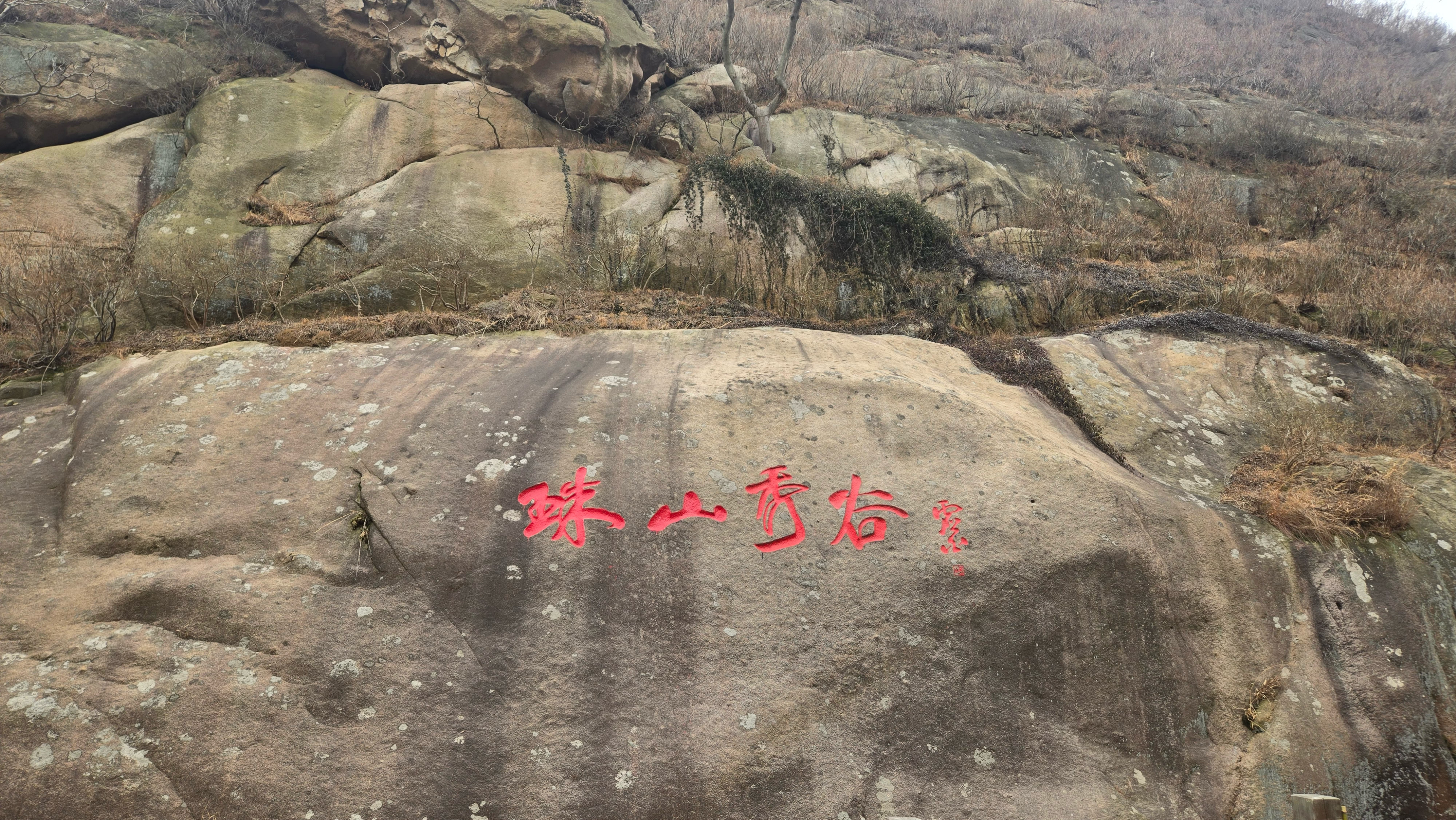
Zhushan Xiugu (Pearl Mountain Valley)
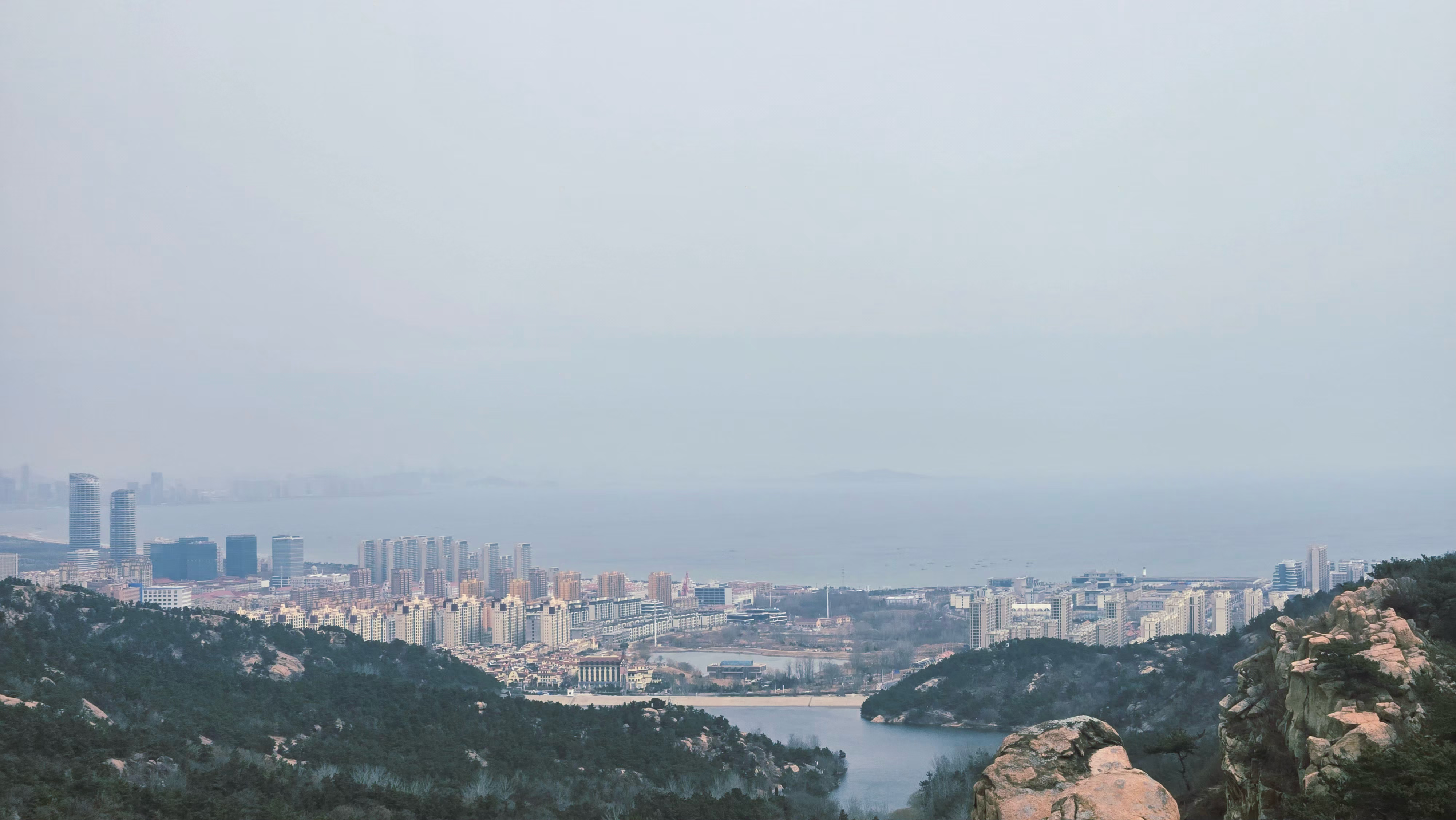
Follow Shanchuan Road straight to the visitor service center — scan your ID card and you’re in. Even before entering the scenic area, you can see the dam. Inside, there’s a sizable reservoir named Yingshan Lake, which on clear days reflects Dazhu Mountain’s silhouette.
Two paths branch around the lake — a wooden boardwalk on the south side, an asphalt road on the north (likely for sightseeing vehicles during peak season). The two paths run close together and converge quickly at a plaza. Wild azaleas (Rhododendron simsii) line the road. There are information boards recounting the history of the azalea:
After the ancient King of Shu, Du Yu, died, he transformed into a cuckoo bird. Each spring planting season, the bird would call, and the people of Shu would say, “This is the spirit of our King Wang.” Hence they called the cuckoo bird “dujuan.” The line from the poem I memorized in high school — “Zhuang Sheng dreamed at dawn, lost in butterflies; the Spring Heart of King Wang entrusted to the cuckoo” — that King Wang is Du Yu.
Mom said the right-hand path was easier, no steps, so we took the road.
Along the way you can see abandoned houses, gravestones, and themed display boards — mostly azalea bloom photos and scenic area maps. Then you reach the convergence point: a plaza with sausage vendors. Even our two free-range chickens at home came along.
A few steps ahead, some amusement设施. Among them is an incredibly ugly Boonie Bears sculpture that I first saw over a decade ago and is somehow still standing. Right next to it: freshly built Ne Zha 2 sculptures (Shen Gongbao, the demon pill, and the spirit pill, plus three rather well-crafted red panda sculptures). Two eras of animation sculptures side by side — the contrast is stark.
There’s also a playground nearby. Mom and I went on the swings for a bit, had some water and dried yogurt bites[1]Ruyijia Inner Mongolia High-Calcium Roasted Fresh Yogurt - tmall.com.
Past the plaza area, you’ll pass the stone inscription below. After that, the path becomes mountain trail — lots of steps to climb. I’d like to thank Xinyuan Dormitory at some university in Chenghua District. Four years of climbing to a 7th-floor dorm made me terrifyingly strong 👍
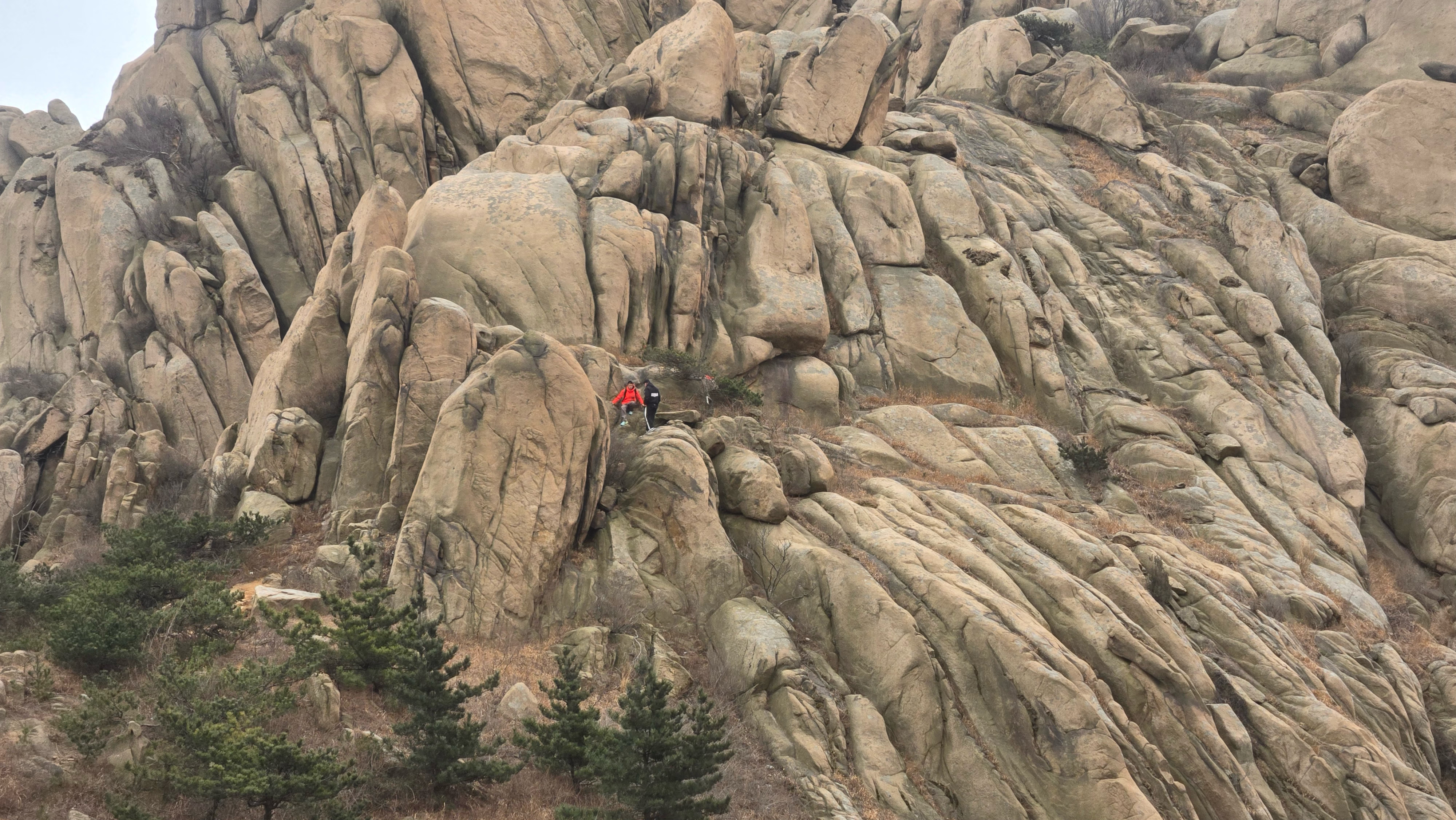
The rest is climb-rest-climb. Nothing much to say, here are some photos.
Smoke Tree (Huanglu)
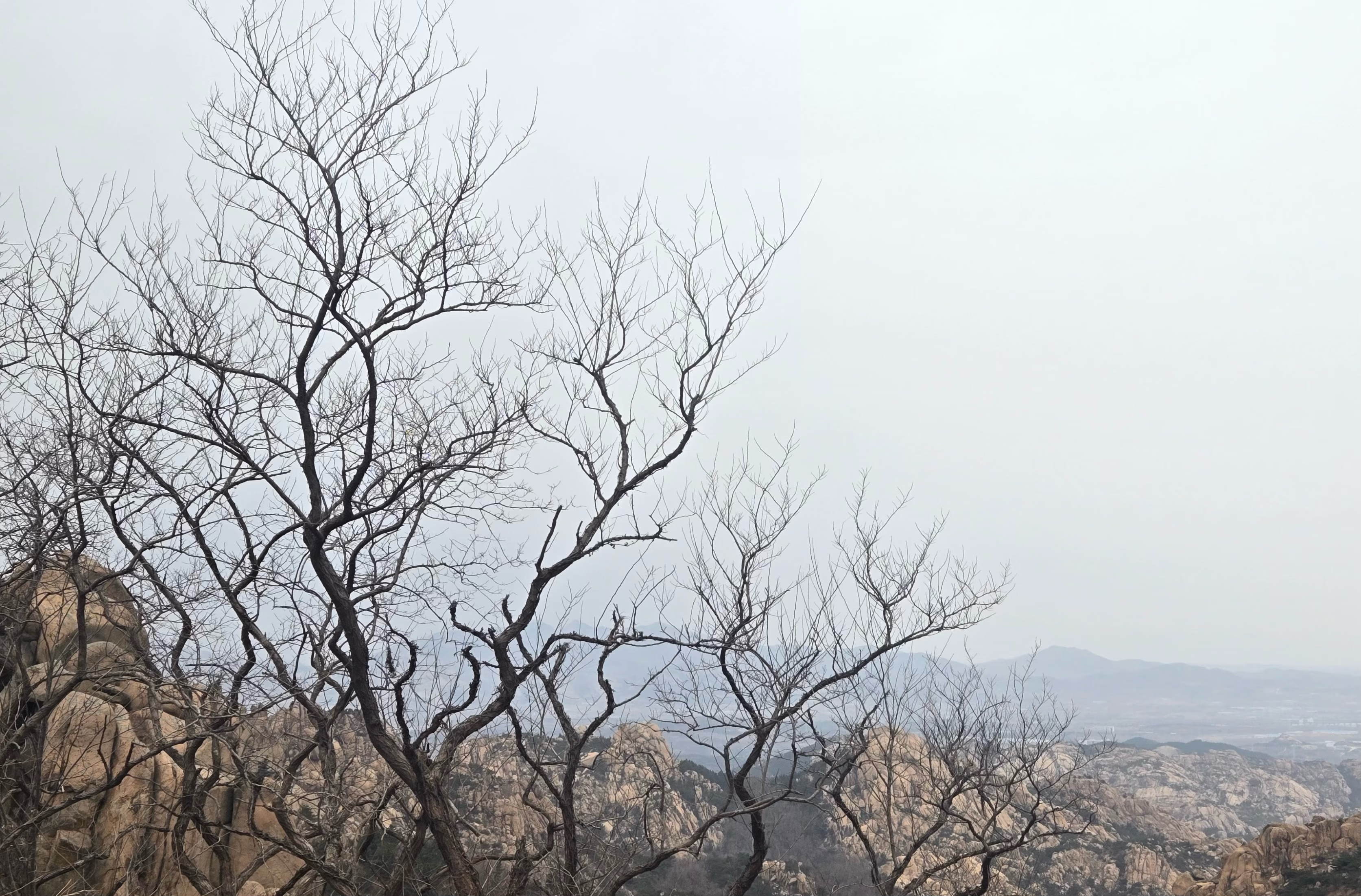
I didn’t recognize it either. Douban (an AI app) says this is smoke tree (Cotinus coggygria), which turns red in autumn. The tips (fruit stalks?) look like capillaries reaching into the air. Beyond it is Lingshan Bay, with Lingshan Island on the sea.
At the Summit
An hour of climbing later, I reached Dazhai Peak, half-dead with exhaustion. The wind was fierce — had to put my down jacket hood up. Sat on a stone bench, set down my dried yogurt on the stone table, and watched two serious hikers heading down 👍
After watching a few episodes of Secret Garden, I’m only good for the “spontaneous impulse” portion of mountain climbing.
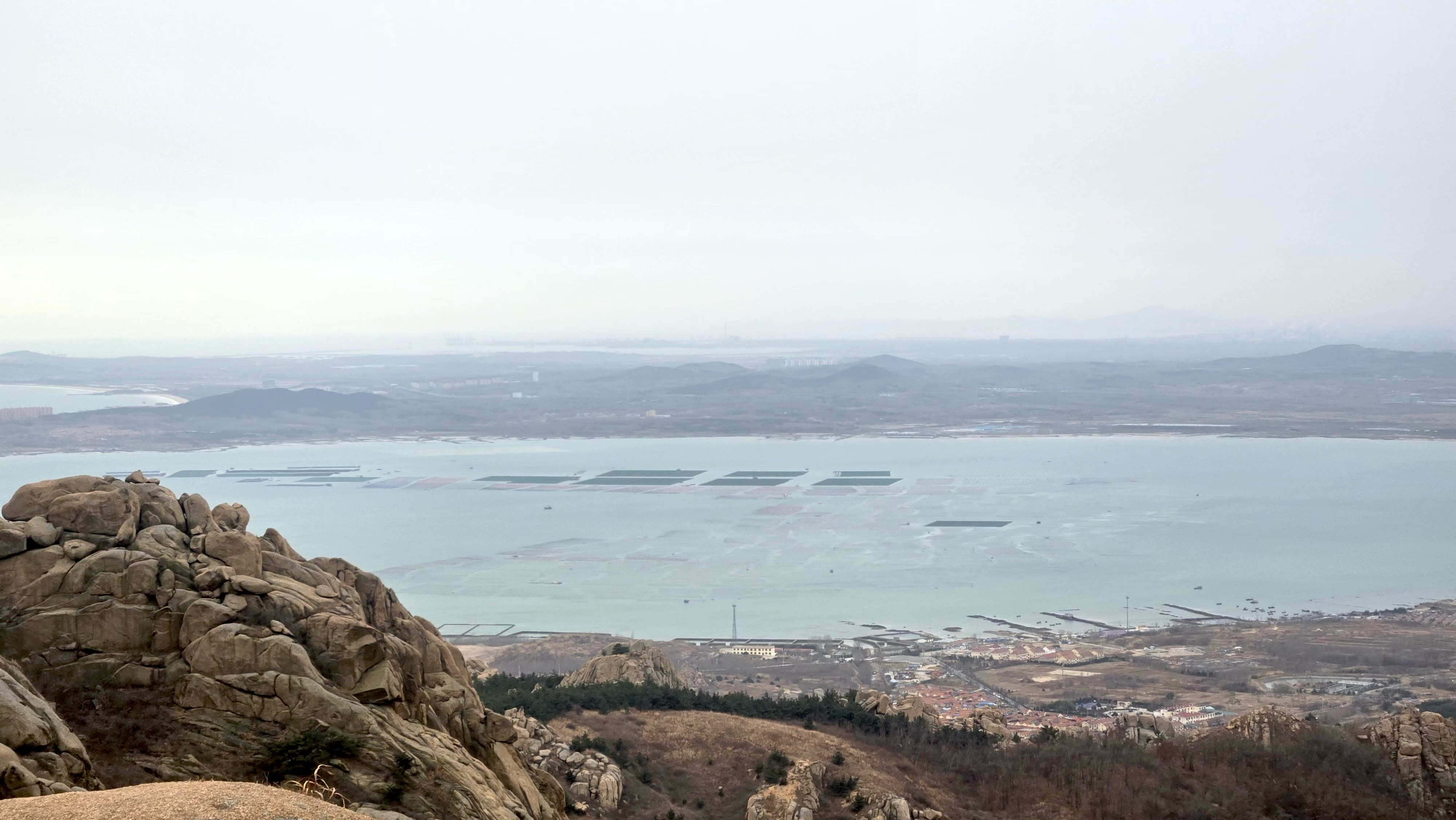
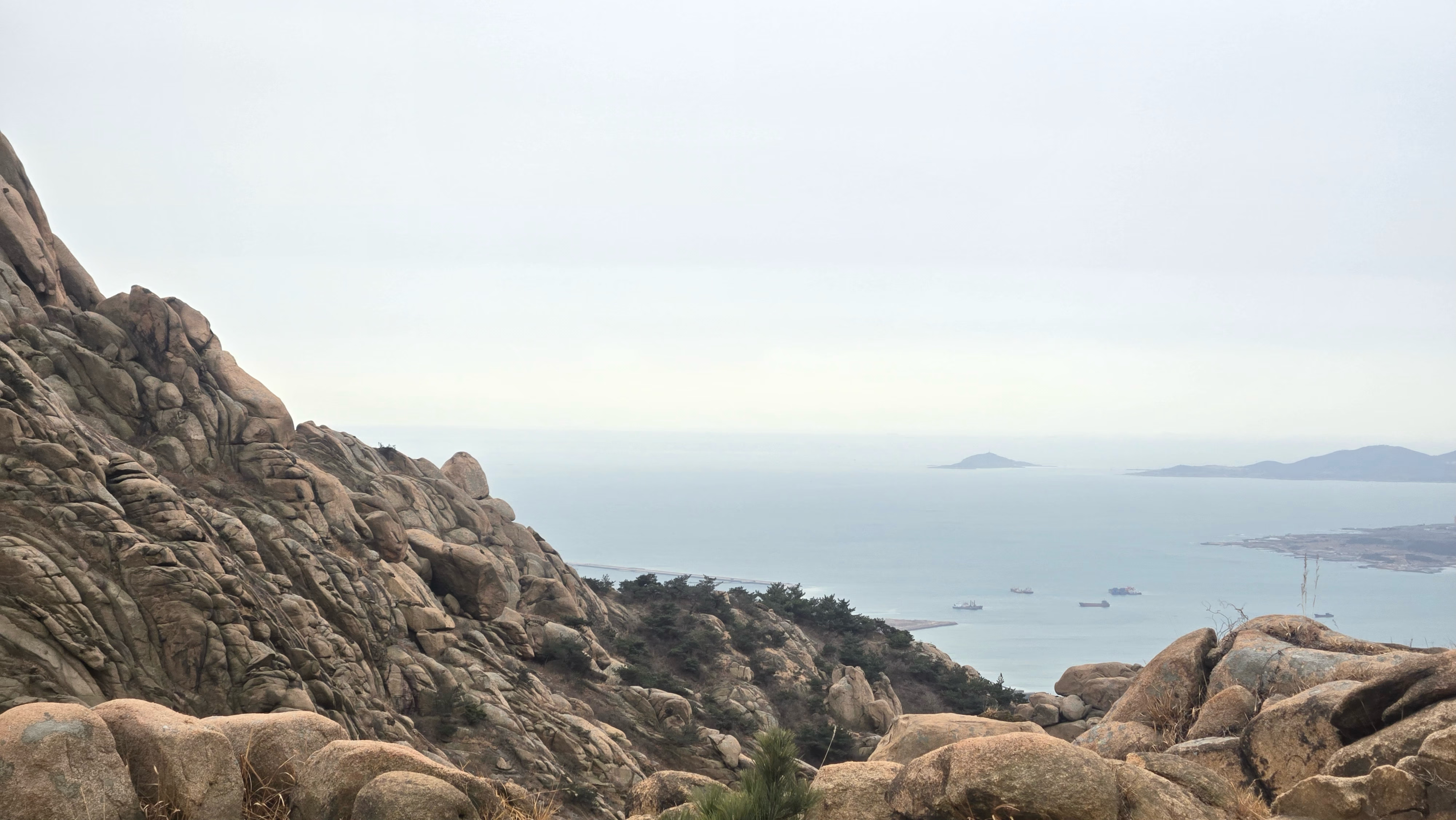
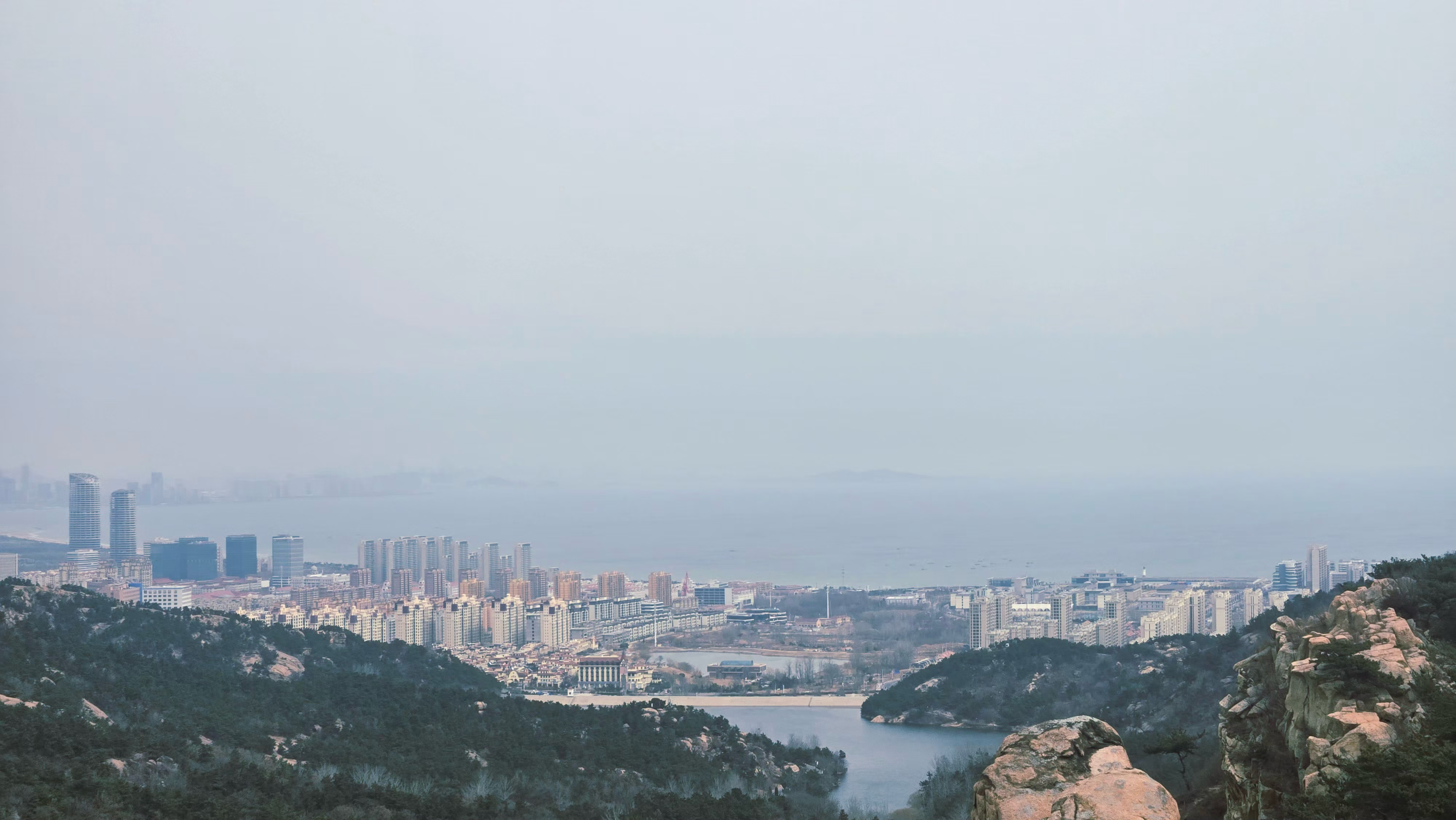
Stood up, walked a few steps. To the west, you can see scallop farms across the way — forgot the village name. From the summit looking east, you can see Yingshan Lake near the entrance and the sea beyond.
Stone Gate Temple
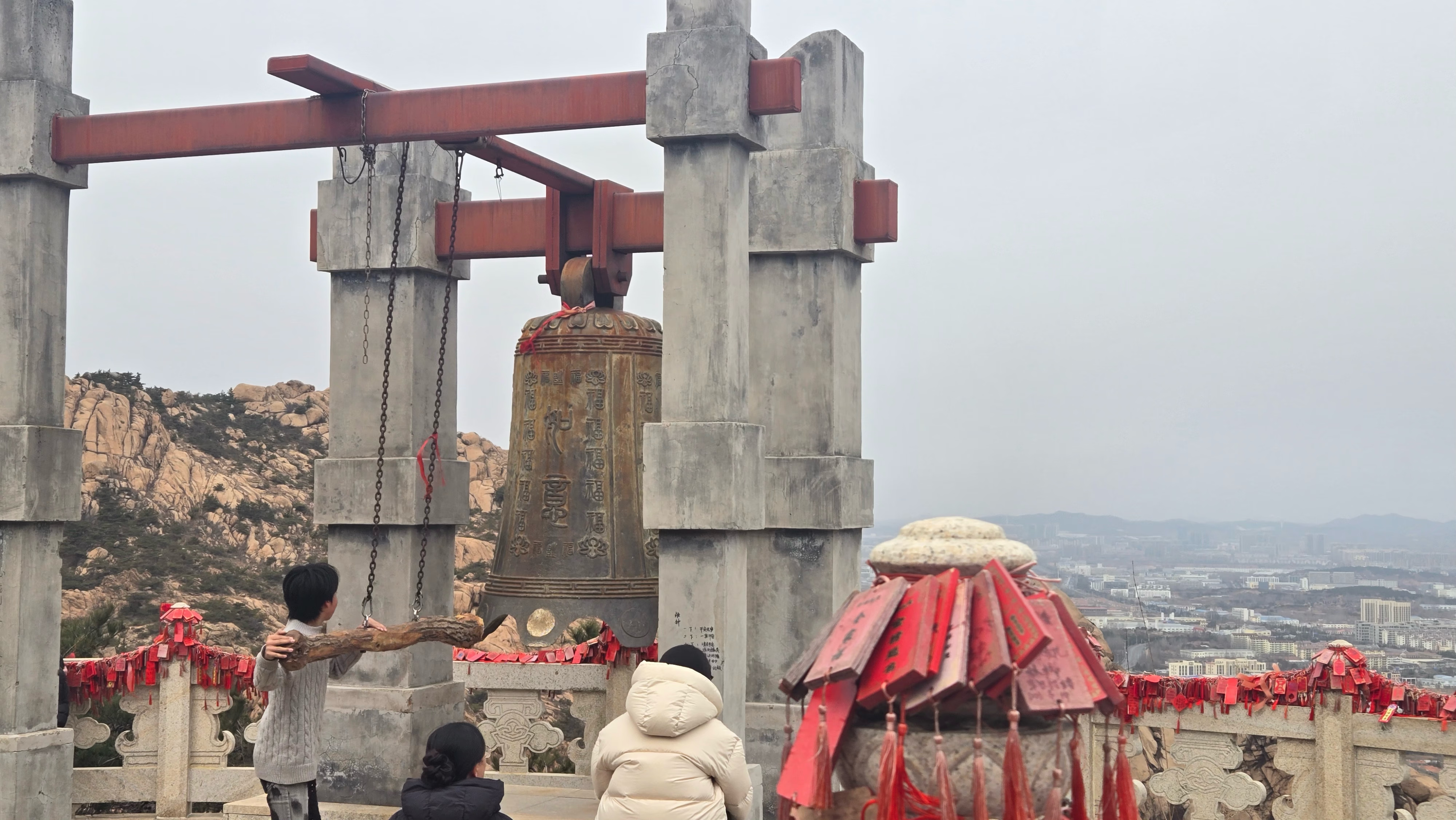
The bell that used to hang inside Stone Gate Temple — engraved with the characters for “auspiciousness” and “blessing” — has now been moved outdoors. There’s a boulder on the mountain that resembles a giant Buddha, but it requires some imagination from visitors.
You can hear the bell ringing as you descend from Dazhu Mountain (learned a new word from Secret Garden and now using it recklessly). Outside, there are blessing plaques for sale — write your wish and hang them on the railing. I looked: some people wrote about academics, some love, some career. Mom said, “Make a wish.” Didn’t have one, so we just moved on to the temple.
Temple Gate
Continue forward, cross a suspension bridge, pass a Heart Sutra stone inscription, climb another ten minutes of steps, and you arrive near Stone Gate Temple.
First you pass through the stupa grove on the south hillside. Twelve funerary stupas stand among the bamboo — said to be the resting places of successive eminent monks. It’s shaded, quiet, and peaceful. The wind rustling through the bamboo tips sounds clean and pleasant. A few more steps and you’re at the temple entrance.
The temple uses two massive natural rocks as its mountain gate, which is why locals call it “Stone Gate Temple.” The plaque above reads “石门寺” in the calligraphy of Chu Suiliang.
Beside the gate is a spring called Jade Spring. Legend says Li Shimin (the Tang emperor) drank from it, so it’s also called Imperial Spring. The water is said to be jade-green and sweet, though now it’s enclosed behind glass. People used to toss coins into it.
In the late Sui and early Tang, Li Yuan and his son campaigned far and wide. Once, Li Shimin was encircled by Sui troops. Fleeing in desperation, he rode from Qingzhou into Jiao County. Suddenly he saw a temple with stone gates, shut tight. With no time to knock, he spurred his horse toward a massive boulder beside the temple. The horse leapt clean over the wall and landed in a bamboo grove inside, then collapsed and could not rise again.
The Sui soldiers arrived and searched everywhere, but Li Shimin and his horse had vanished. They broke through the temple gates, bound all the monks, and interrogated them one by one. The monks, terrified by the soldiers’ ferocity, stammered and dared not speak. The soldiers killed a few monks at random, bound the abbot, sealed the temple and the mountain. Li Shimin, hiding in the bamboo grove, heard it all clearly but dared not make a sound. Eventually he passed out — and remained unconscious for three days and three nights. When he woke, a young monk was cooking rice porridge for him inside the belly of the Great Buddha statue. It turned out the young monk had secretly dragged him inside the Buddha to hide him.
The Sui soldiers had sealed the temple and the mountain for over half a month, and still could not find Li Shimin, so they set fire to Stone Gate Temple and left. Having survived this ordeal, Li Shimin swore that if he ever came to power, he would rebuild Stone Gate Temple and deliver salvation to all. In the thirteenth year of Zhenguan (639 AD), Li Shimin issued an edict to rebuild Stone Gate Temple, and found the young monk who had saved him to serve as abbot. The incense at Stone Gate Temple reached its peak, lasting until the end of the Song and start of the Yuan dynasty.
- From: Liu Shengwen and Wang Zhaoming, Li Shimin Rebuilds Stone Gate Temple
- Link: The Gateless Temple on Dazhu Mountain — Stone Gate Temple
Inside the Temple
Inside, the original Heavenly Kings Hall, Ksitigarbha Hall, Jade Spring Palace, and Mahavira Hall are all still there, though renovated. Behind them are newer additions — Amitabha Hall on the west, Medicine Buddha Hall on the east, and Yuantong Precious Hall[2]“Yuantong” means “perfected understanding of all wisdom and Dharma methods.” According to the Surangama Sutra, Guanyin Bodhisattva attained supreme enlightenment through the ear-gate perfected understanding method (awakening through sound), and this wisdom can pervade the ten directions without obstruction. Thus “Yuantong” became a distinctive attribute of Guanyin Bodhisattva. in the center. Enter and you’re face-to-face with a Thousand-Armed Guanyin statue. Walking clockwise, the hall contains over thirty Guanyin statues, including a Clam Guanyin[3]Clam Guanyin (Heavenly Form): residing within two clam shells, or riding atop a clam across the sea. This image originates from the story of Tang Emperor Wenzong eating clams and encountering Guanyin manifesting within. According to the Guanyin Cilin Ji, Volume Down: Tang Emperor Wenzong was extremely fond of eating clams. Coastal officials used this as a pretext for heavy tribute, squeezing the people’s wealth and causing widespread grievance. Upon hearing this, Guanyin transformed into a clam and manifested in the imperial kitchen. The emperor was astonished and summoned Zen Master Hengzheng of Zhongnan Mountain to inquire, and thus learned it was Guanyin’s manifestation and teaching. He immediately decreed an end to the clam tribute and forswore eating clams. He also ordered all temples to build Guanyin halls. Coastal fishermen rejoiced and enshrined the image in every home, calling it Clam Guanyin. — very fitting for a coastal region. The only other name I remember is White-Robed Guanyin and Amusement Guanyin.
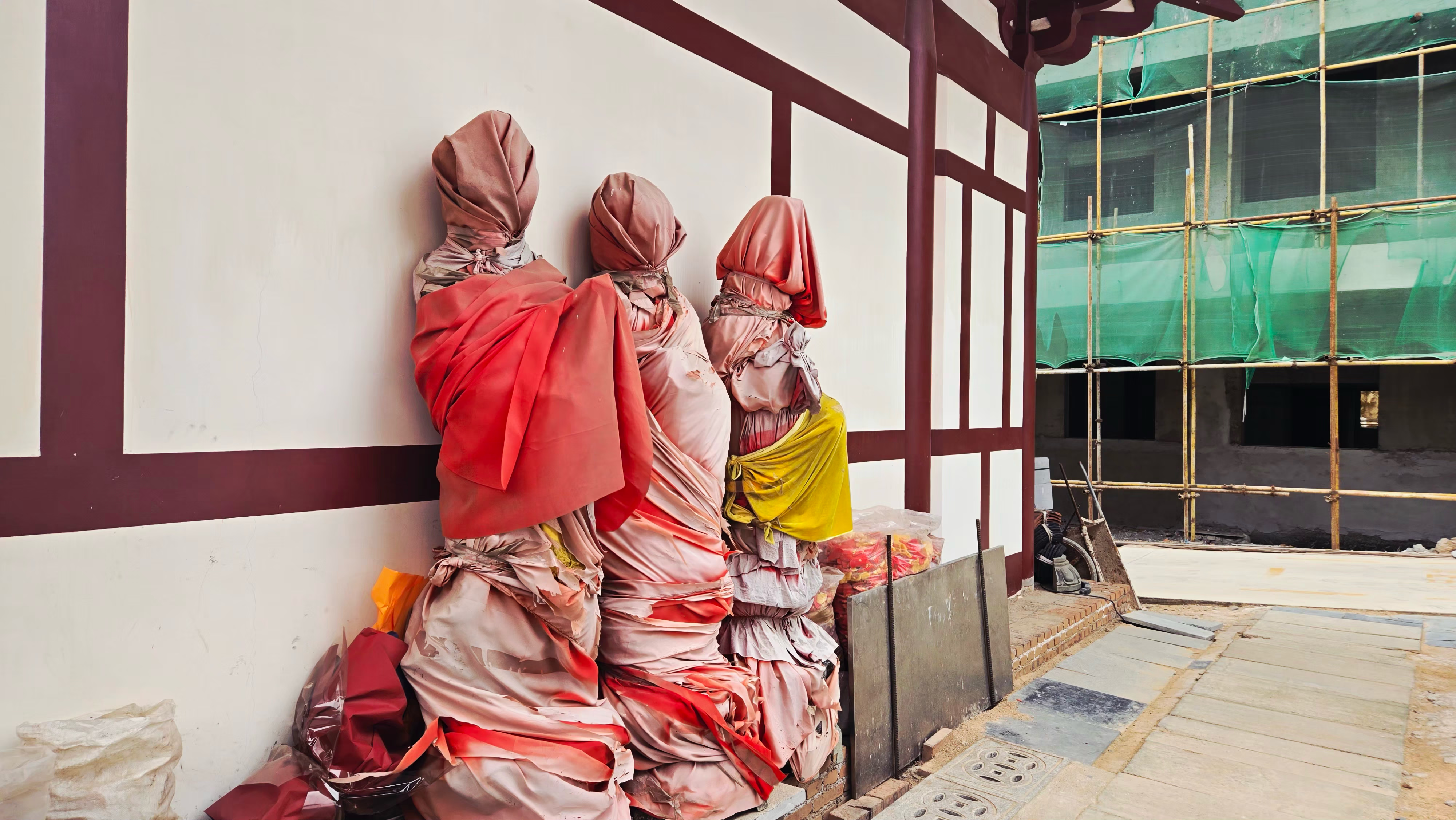
On one side of the side hall, you can still see three Guanyin statues yet to be unpackaged, wrapped in red cloth. Scaffolding and unfinished floor tiles behind them — the expansion is still underway.
Outside the Temple
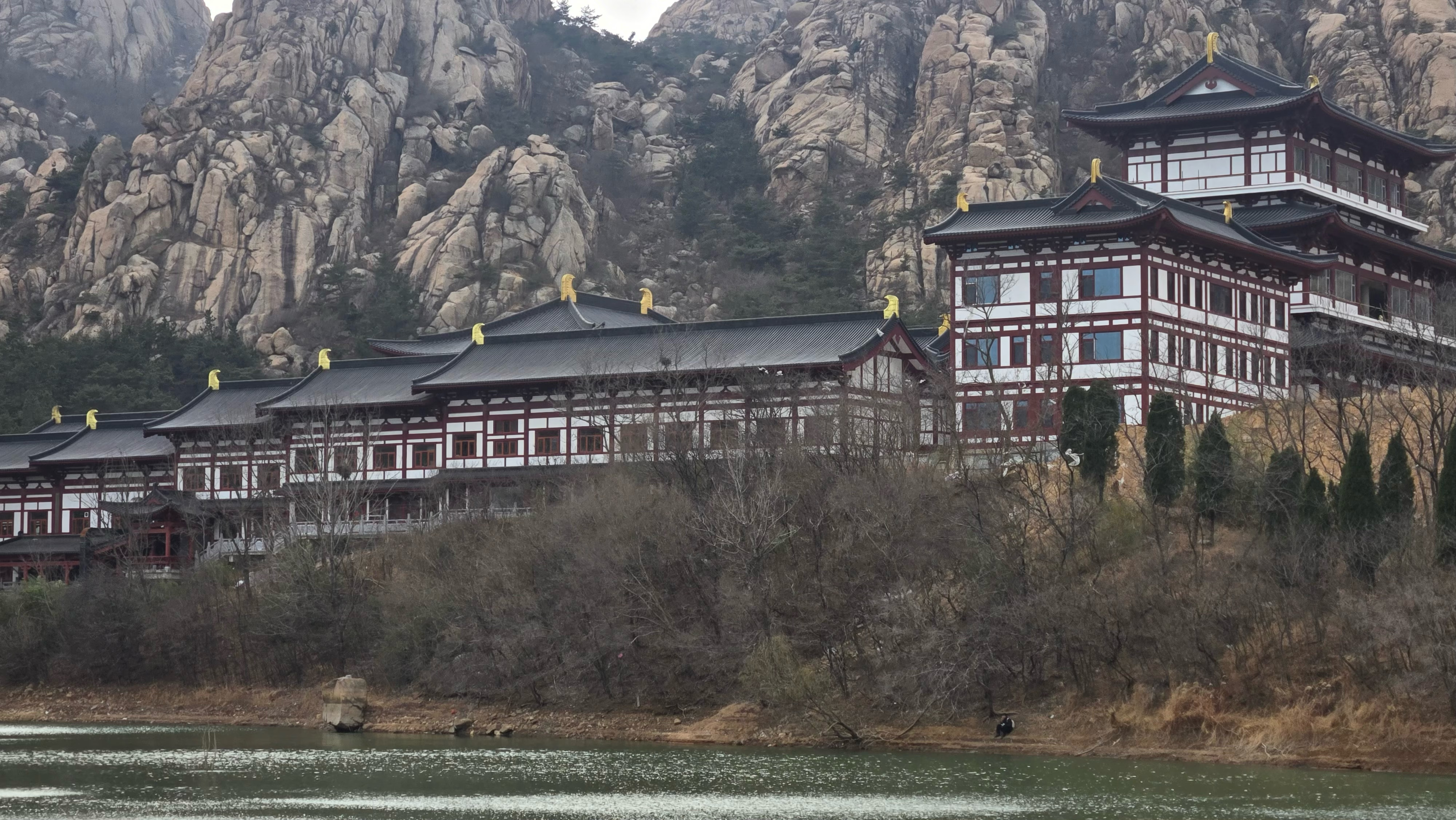
Leaving the scenic area, you can see the full outline of the building complex from outside the reservoir. It’s been nearly ten years since my last visit. The place has been renovated — visibly different. White walls, red pillars, dark gray tubular tiles, gilded chiwen (owl-like roof ornaments) on the upturned eaves.
I don’t know architecture, but I can tell: the buildings are new. Brand new.
I asked AI about the architectural style — it said Tang-style revival. Given the history, that seems credible.
Exiting the scenic area, there were people selling shrimp paste on the road. No idea who they expected to buy — there was almost no one around. It’s about a 3 km walk to the Zhushan Xiugu parking lot. Thankfully Dad drove to pick us up. For dinner, big oysters 🦪😋 — Life is good~
Ruyijia Inner Mongolia High-Calcium Roasted Fresh Yogurt - tmall.com ↩︎
“Yuantong” means “perfected understanding of all wisdom and Dharma methods.” According to the Surangama Sutra, Guanyin Bodhisattva attained supreme enlightenment through the ear-gate perfected understanding method (awakening through sound), and this wisdom can pervade the ten directions without obstruction. Thus “Yuantong” became a distinctive attribute of Guanyin Bodhisattva. ↩︎
Clam Guanyin (Heavenly Form): residing within two clam shells, or riding atop a clam across the sea. This image originates from the story of Tang Emperor Wenzong eating clams and encountering Guanyin manifesting within. According to the Guanyin Cilin Ji, Volume Down: Tang Emperor Wenzong was extremely fond of eating clams. Coastal officials used this as a pretext for heavy tribute, squeezing the people’s wealth and causing widespread grievance. Upon hearing this, Guanyin transformed into a clam and manifested in the imperial kitchen. The emperor was astonished and summoned Zen Master Hengzheng of Zhongnan Mountain to inquire, and thus learned it was Guanyin’s manifestation and teaching. He immediately decreed an end to the clam tribute and forswore eating clams. He also ordered all temples to build Guanyin halls. Coastal fishermen rejoiced and enshrined the image in every home, calling it Clam Guanyin. ↩︎