Recently I came across a show about the Langya Ancient City in Linyi — “Splendor of Langya” — and it instantly pulled me back to February 27th, the day I went to Langya Terrace with my parents.
At the time, I was only taking photos, too lazy to write anything down. After the semester started, I uploaded the decent ones to the Afilmory gallery (GnixAij’s Gallery | Langya Terrace), and that’s where they’ve sat — a pile of raw images with not a single word written for the post. This semester I have nothing going on; it’s just procrastination all the way down.
I’m in the library now, taking a break. Might as well write up the record. Photos preserve the moment; words preserve the mood.
About Photo Formats 📸
Every time I post a travel essay, one nuisance is that phone photos are all in HEIC or JPEG format. Due to patent restrictions, browsers other than Safari can’t display HEIC images natively, and Obsidian and other Electron apps get caught in the crossfire.
Afilmory handles decoding on the client side, but my blog is simple — no such integration.
So every time I have to manually convert HEIC to AVIF or WebP and then upload to the image host — keeping two nearly identical copies of the same image in the same storage feels wasteful…
Or I could be lazy, like I did in the Sea World & Panda Base post, and just use the low-res JPEG thumbnails that Afilmory generates…
Bitiful CoreIX 🫵🤓
Just remembered — the S3 service I use supports real-time media processing[1]CoreIX Overview — Bitiful Docs. Saved! Just append a query parameter to the asset URL, and the server handles format conversion automatically. No more manual image conversion.
- Add query parameters to the end of the URL: key is
fmt, value isavif/webp/other media formats, e.g.:
 - ✅ DONE
Travel Tracking 🐾
Slept until 9 today. Dad drove us to Langya Terrace — otherwise it’d be a 1-hour metro ride. Dad didn’t go in; we bought 2 tickets, 75 RMB total. Pretty quiet — maybe 100-odd visitors in the whole scenic area?
Memory hasn’t completely faded. Roughly, the route was: Langya Terrace parking → West Gate → Langya Culture Exhibition Hall → Dragon-Viewing Pavilion → Imperial Road → Group Sculpture → Military Base → Wangyue Tower → Cloud Ladder → Dragon King Hall → Xu Fu Hall → Stomping Trench → Cloud Bridge → Langya Blessing. About 2 hours to see it all.
Langya Culture Exhibition Hall 🏛
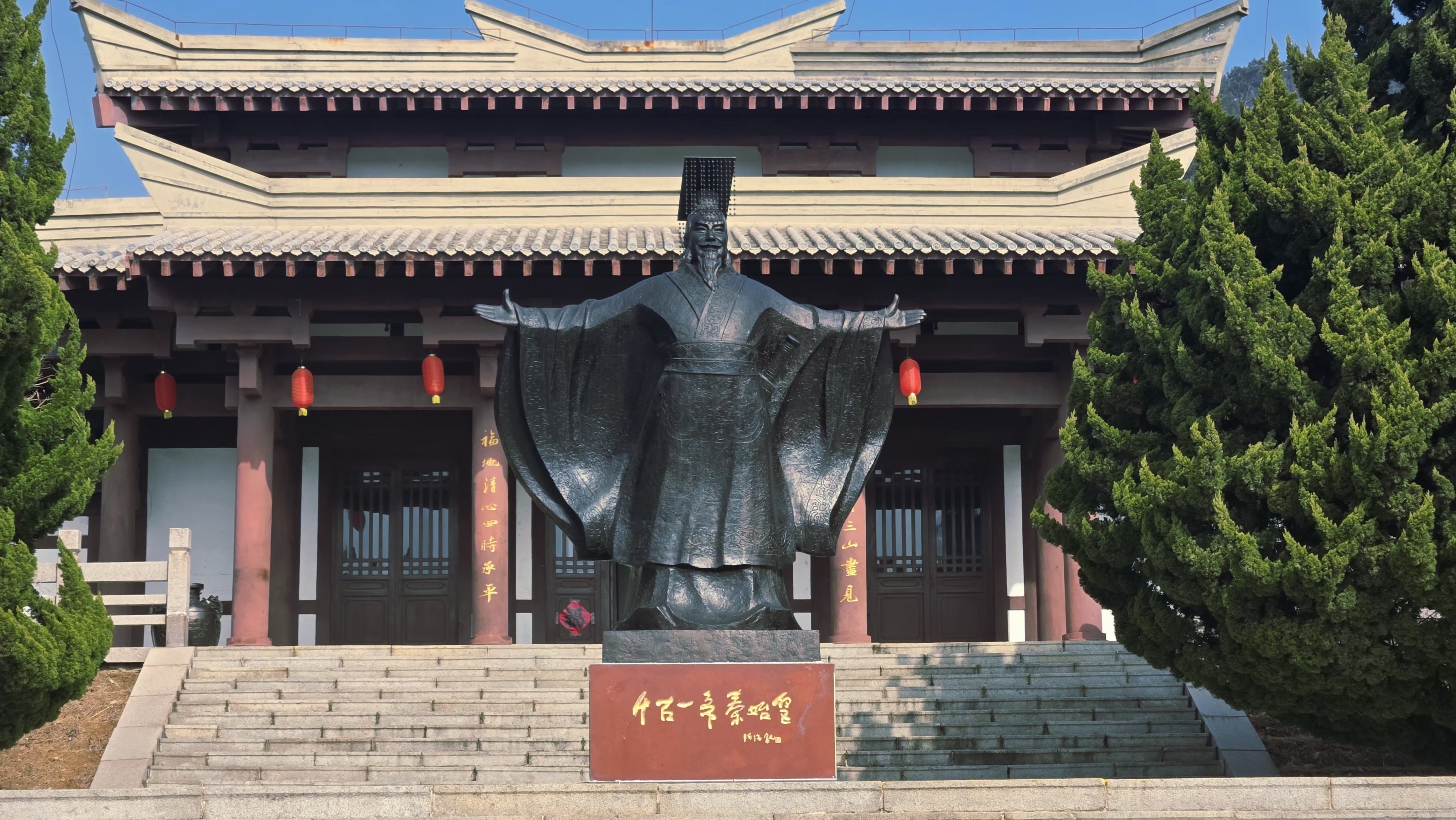
A few steps past the West Gate and you’re here. At the entrance there’s a statue inscribed “The First Emperor Through the Ages, Qin Shi Huang,” flanked by pine trees. Opposite Qin Shi Huang seems to be an archaeological site.
Inside, like most museums, they display archaeological artifacts, calligraphy, and Langya history. Like Jimo, its history traces back to the Western and Eastern Zhou periods.
Dragon-Viewing Pavilion 🐲
From the exhibition hall, follow the mountain trail and you’ll reach here. Along the way, we caught up with a family — parents with a ~5-year-old girl. Stopped for them to take photos; took a few dozen minutes to arrive.
The architecture is Qing dynasty style; second floor is not open. Across from it is Longwan Beach.
Longwan Beach has 66 square kilometers of open water and 2.7 km of sandy coastline. The beach is gently sloped, the water clean, earning the description “emerald waves, silver surf, golden sand” — a rare natural seawater bathing beach. Due to special geographic and meteorological conditions, clouds above Langya Terrace often shift into dragon-like formations dancing through the sky, and when southeast winds reach force 5 or above, the waves in Longwan below create a spectacle of countless silver dragons surging and converging. This is the “Viewing Dragons at Langya Terrace” wonder that leaves visitors from near and far in awe.
- Text Source: Longwan Beach — Qingdao West Tourism
- Image Source: 10 Paradises Hidden on Qingdao’s West Coast
Imperial Road 🎢
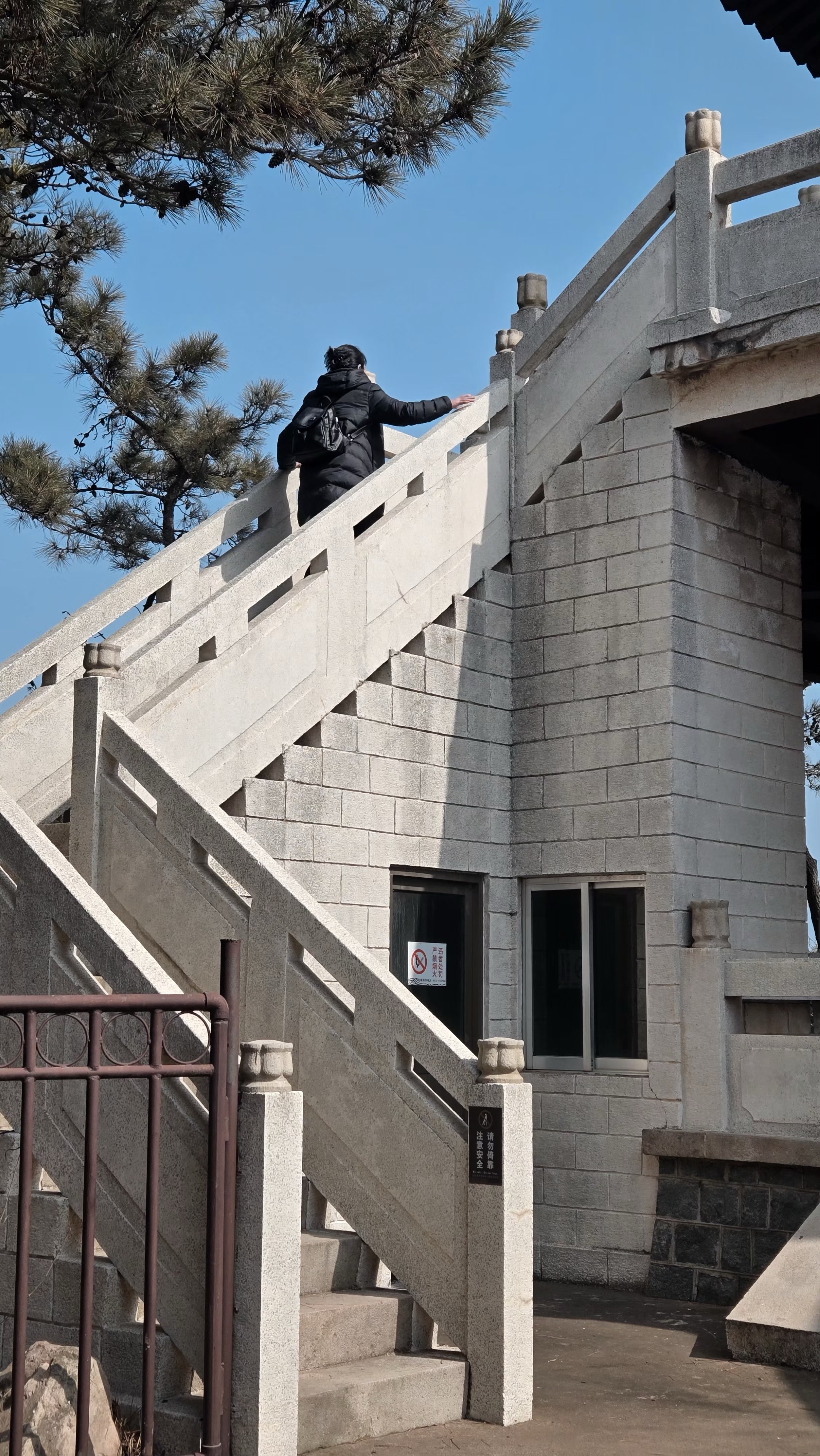
Past Dragon-Viewing Pavilion, the path forks into two. We took the walking trail. About halfway, you reach the Qin Imperial Road.
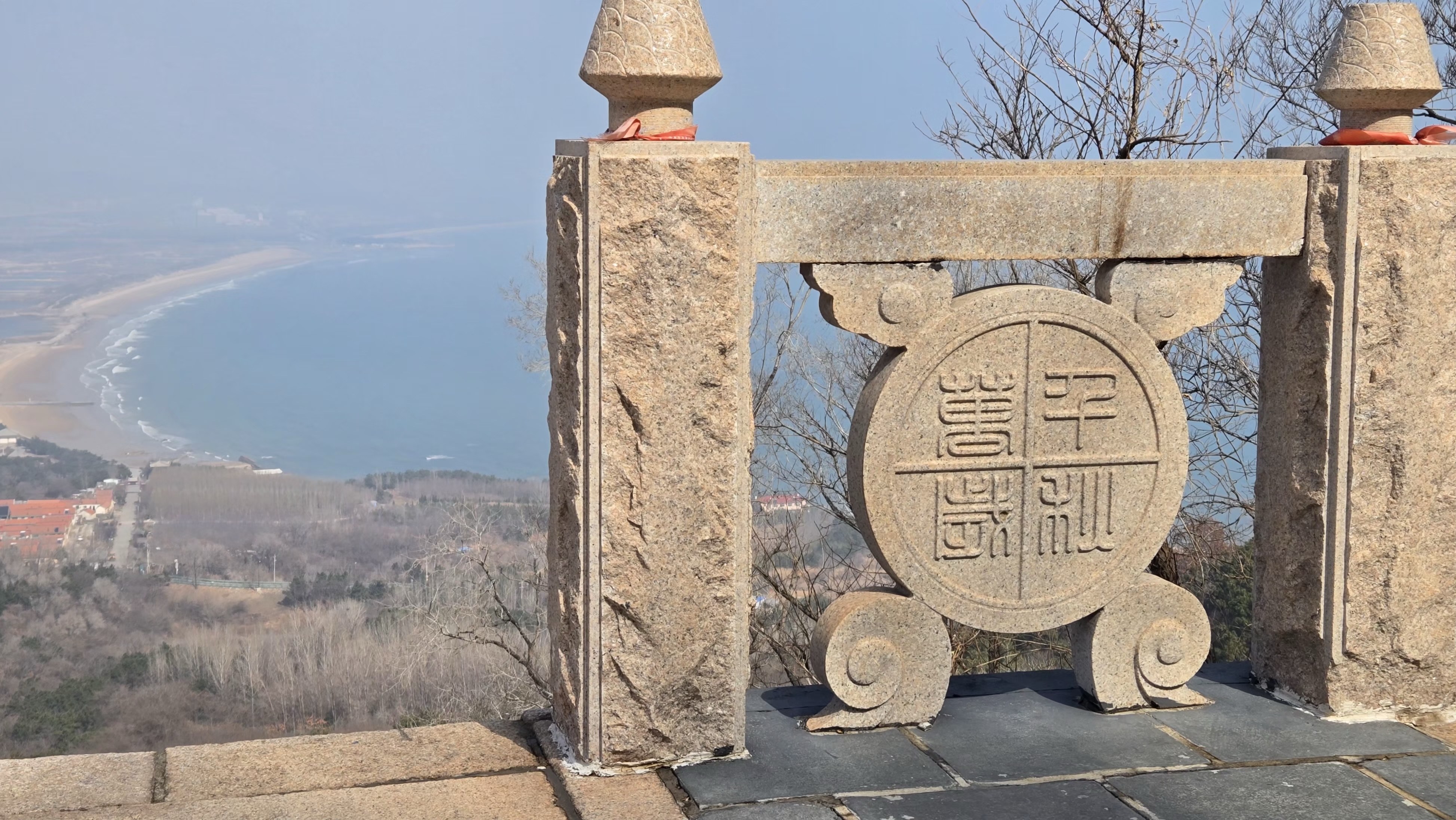
The Qin Imperial Road is the northernmost of the three imperial roads Qin Shi Huang used to ascend Langya Terrace, restored based on historical gazetteer records at the original site. It has 386 steps, an incline of 135 meters, and a width of 6.8 meters, with four rest platforms. The central axis is paved with square bricks — the path the emperor rode on in a specially made palanquin. The emperor walked the center; ministers walked the sides. The railings on both sides are carved granite, with column caps shaped like pinecones and pine branches — a mark of the First Emperor’s fondness for pines.
While researching, I came across a claim that since the Qin dynasty possessed the virtue of water, walking the Imperial Road would produce a special echo — as though stepping through water. I didn’t notice this at the time. Though even if I’d known, it probably requires considerable imagination to hear it.
On the east side of the third platform, a renovation unearthed an ancient building foundation resembling an Egyptian pyramid. The scenic area signage says its purpose is still unconfirmed.
It is genuinely steep. I rested at the platforms four times on the way up, admiring Longwan across the way (not altitude sickness). The Longwan coastline and the surf breaking white are clearly visible — genuinely beautiful, worth at least half the ticket price. The platforms also have stone carvings, all pine motifs — Qin Shi Huang liked pines, so the Imperial Road features many pine decorations.
BTW, when your legs give out, just think of the poor bearers carrying the emperor’s palanquin.
Group Sculpture 🗿
The group sculpture depicts Qin Shi Huang ascending Langya Terrace as recorded in historical texts — quite finely crafted. Also, probably because Spring Festival had just passed, the scenic area staff had put red scarves on the sculptures.
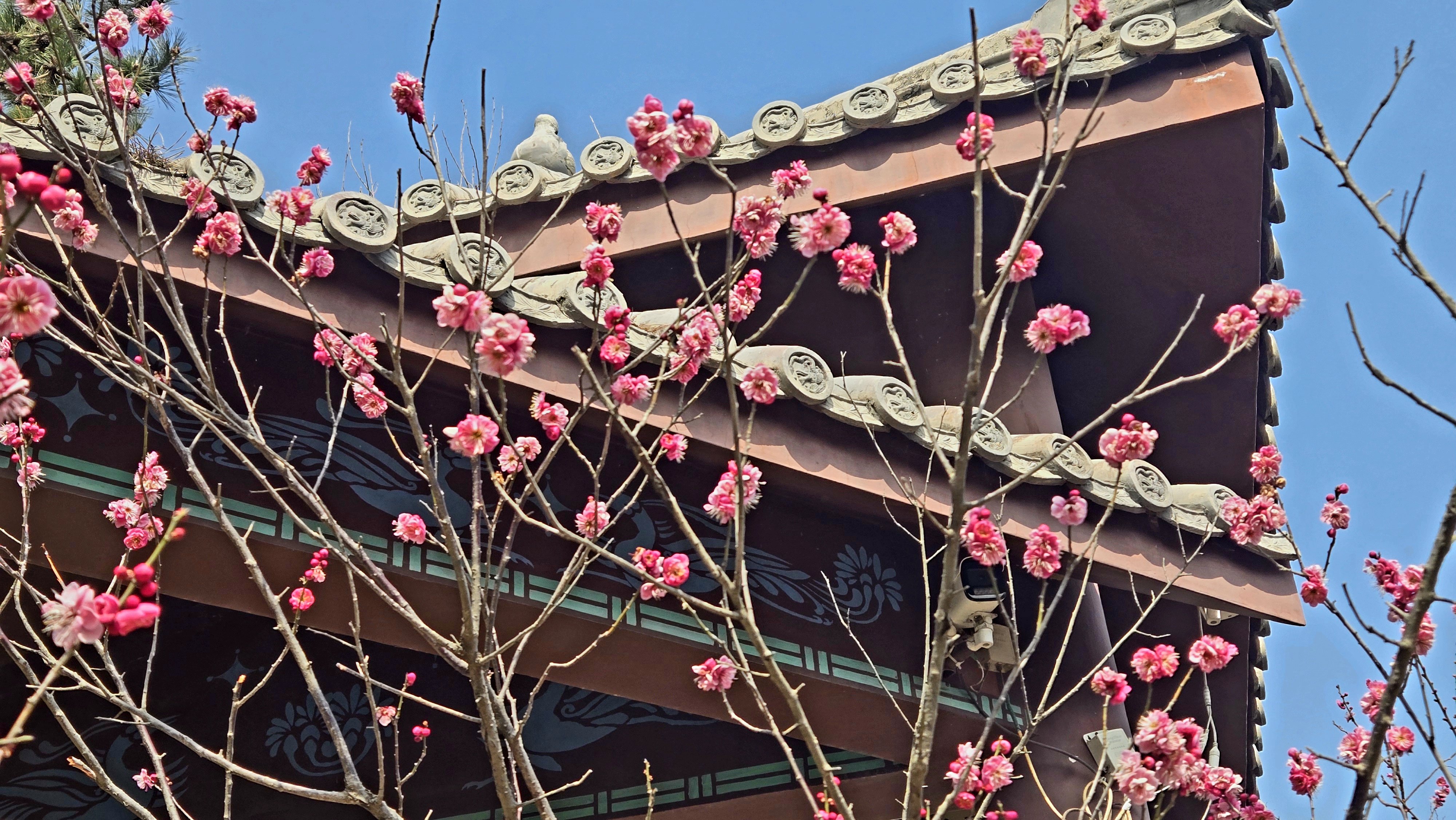
There’s a military base nearby with a radar installation — no photography allowed. Also some pavilions in the vicinity with plum blossoms blooming nicely.

Wangyue Tower 🏯
By this point we’d seen essentially all the buildings in the scenic area. The last stop was Wangyue Tower (Tower for Gazing South toward Yue).
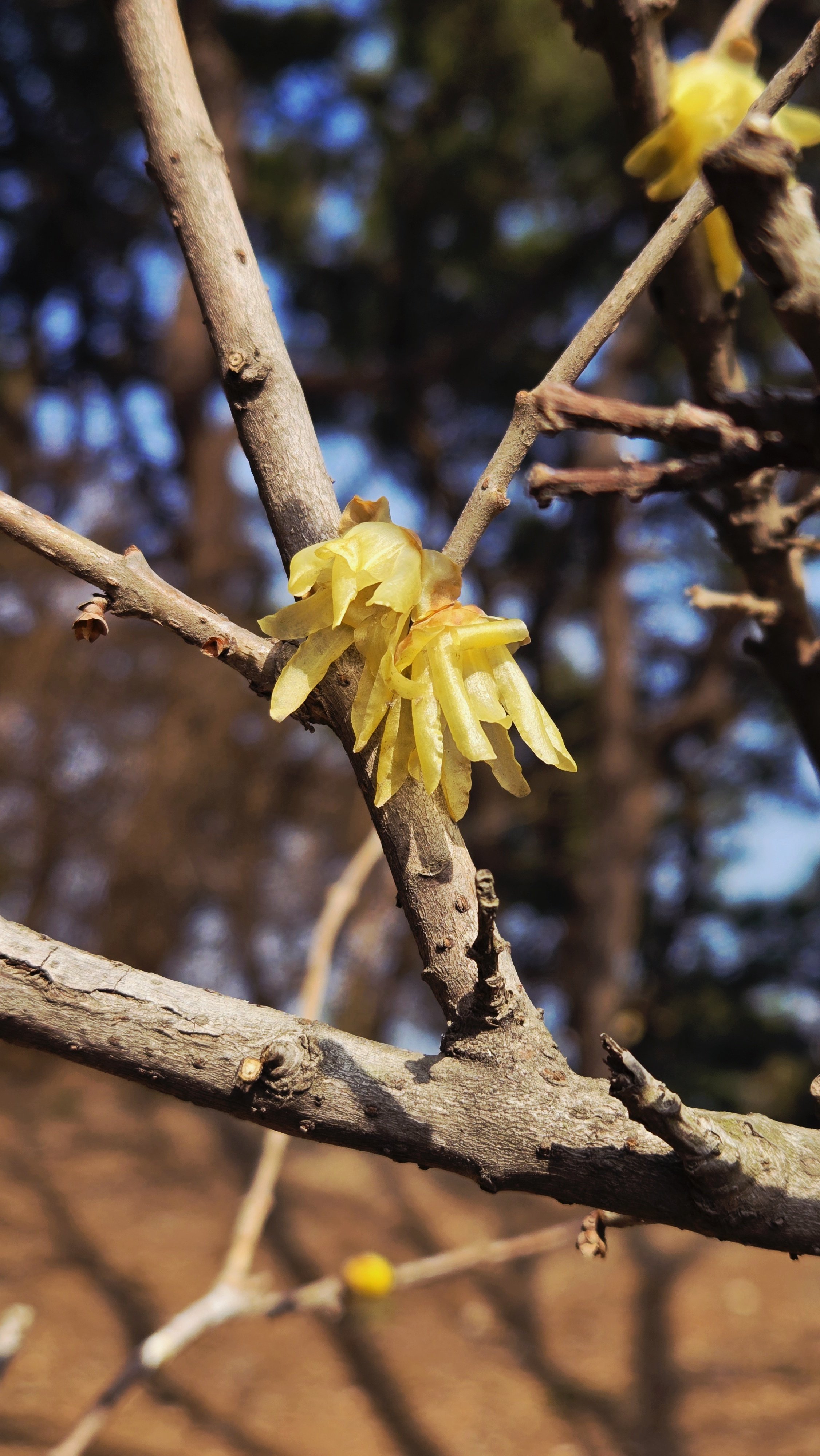
On the way there, I suddenly caught a rich fragrance — it came from yellow flowers blooming on a tree. Mom warned me not to lean in too close, saying an aunt next door to her sister’s house once got some kind of nose condition from sniffing a flower.
Caution is fair enough, but I pulled out Douban’s image recognition and — it’s wintersweet. Never mind then.
About Wangyue Tower: legend holds that in 473 BC, after King Goujian of Yue destroyed Wu, he resolved to expand northward. He moved the capital from Kuaiji to Langya and built an observation terrace on Langya Mountain, and on the eastern summit he constructed this tower. From the top, you can gaze south toward his homeland of Kuaiji, and also look out to the East Sea.
句践伐吴,霸关东,从琅琊起观台,台周七里,以望东海,死士八千人,戈船三百艘。
Goujian attacked Wu, dominated east of the pass, and built an observation terrace at Langya, seven li in circumference, to gaze upon the East Sea, with eight thousand death warriors and three hundred warships.
(Eastern Han) Yuan Kang, Yue Jue Shu (Records of Yue), Volume 8, woodblock edition, pp. 1–2
Though some argue that this Langya is not that Langya — Goujian’s capital may have been at Jinping Mountain, Jiulongkou Ancient City in Lianyungang, Jiangsu.
MISC
After that, it was just following signs to find the way back. Passed some military barracks. Back at Dragon-Viewing Pavilion, I helped a young couple with directions, then pulled up Amap to find the spots I’d missed — nearly went the wrong way. I can’t tell north from south, and when the compass spins wildly, I’m useless. Eventually found the right path: along the Cloud Ladder, the second Imperial Road. I’d imagined an actual ladder 🪜, but thankfully it’s just steps. Downhill was easy. At the bottom is Xu Fu Hall, dedicated to Xu Fu — a fellow Qi native — explaining how he sailed east to Japan, following the coastline: Shandong → Liaoning → Korean Peninsula → Japan.
There’s also Dragon King Hall, dedicated to the Dragon King — the fishermen’s faith, praying for favorable winds and abundant catches. And Stomping Trench — legend says when Qin Shi Huang was climbing the terrace and felt he was near the top, the mountain grew taller, so he stomped his feet in frustration.
Near the exit, there’s a stone. One side is inscribed “Langya Blessing”; I’ve forgotten what’s on the other side. After exiting, Dad drove us home. On the road you can see Dazhu Mountain, which I’d previously written about in my travel notes — though many of Dazhu Mountain’s scenic spots remain undeveloped.
For lunch: garlic scallops, steak, and egg fried rice.
Afterword
There aren’t actually that many attractions, and the visit didn’t take long. We covered all the main buildings and finally climbed the Imperial Road, standing at the top looking out at Longwan — looking back now, that was probably the most beautiful moment of the whole trip.
From a modern perspective though, it’s just okay. Huangdao has too many high-rise “pigeon coops” — take the elevator to any rooftop and you can already see the sea. The visual impact just doesn’t land.
For the ancients it might have been different. Rulers could conscript labor to build high terraces, then ride palanquins to the top — emotional payoff and visual impact both maxed out.
Common folk probably couldn’t find developed scenic areas and had to seek out wild mountain terrain on their own — fairly dangerous.
Also, people in the past seemed to care more about gazing toward their homeland — like the Wangyue Terrace. Understandable. Transportation and communication were limited back then. Their homesickness must have been stronger than ours.
I previously read Hesse’s *Beneath the Wheel*, and the landscape descriptions felt abstract — mainly because my own knowledge of “birds, beasts, grasses, and trees” is so sparse.
One benefit of sparse knowledge: flowers and plants feel novel. For example, while the faux-ancient architecture in the scenic area is repetitive and same-ish, the plum blossoms planted alongside them I particularly loved. I used to stay home all winter, barely ever seeing real plum blossoms — this trip was a make-up lesson.
Overall though, you probably need to be interested in history and culture to find this place engaging. If I’d known more about the history of Wu and Yue, the Wangyue Tower might have resonated more. Pre-Qin history is quite dramatic — I once caught fragments of Chronicles of the Eastern Zhou Kingdoms and got interested enough to learn some pre-Qin history. The story of Duke Xuan of Wei’s household alone is so outrageous it left me stunned. The Book of Songs even has two poems specifically documenting that history. Many historical figures are starkly contrasting — savagery, righteousness, darkness, and nobility woven together.
This trip was mostly about spending time with family. Once I start working, opportunities like this will be fewer. If there’s time this summer, I’d like to get together with family again. Though I always feel the West Coast’s tourism resources aren’t especially rich — the coastline is long, but once you’ve seen enough of it, the novelty wears off. Mom says Lingshan Island across from home is worth visiting. I checked — it’s the tallest island in northern China. You can take a boat from Xingguang Island.
Before the semester started, Mom was scrolling WeChat and saw news about the Langya Sea Sacrifice Festival (someone let me cosplay as Qin Shi Huang for once). It was also mentioned on the Qingdao evening news that night.
This is a folk tradition of Langya’s fishermen, though in a few generations it may gradually fade.