---
title: Blog & OSS CDN Traffic Splitting Between Mainland China and Overseas
date: 2025-09-08
excerpt: ICP filing approved. A quick record of setting up split CDN routing for domestic and international visitors.
tags:
- Web
- Network
- Internet
- HTTPS
- CDN
- Blog
- Performance
cover: https://assets.vluv.space/cdn.webp
updated: 2026-07-08 21:17:39
lang: en
i18n:
cn: /cdn_traffic_splitting
translation: 2
---
## Tools Used
| Tool | Core Role | Alternatives | Cost |
| -------------------------------------------------- | ---------------------------------------------------------------- | ----------------------------------------------------- | ---- |
| [DNSPod](https://www.dnspod.com) | Smart DNS resolution by domestic/overseas routes | Alibaba Cloud DNS | Free |
| [Bitiful](https://www.bitiful.com) | CDN acceleration in mainland China
(**ICP filing required**) | Alibaba Cloud CDN, Tencent Cloud CDN, Qiniu CDN | Paid |
| [EdgeOne](https://edgeone.ai) | CDN acceleration outside mainland China | Cloudflare CDN, Vercel CDN | Free |
| [Cloudflare Pages](https://pages.cloudflare.com) | Static origin hosting
Origin for overseas CDN nodes
| Vercel, EdgeOne, GitHub Pages, personal server | Free |
| [EdgeOne Pages](https://edgeone.ai/products/pages) | Static origin hosting
Origin for mainland CDN nodes
| Server in mainland China | Free |
## How It Works
The idea is simple: split traffic with DNS CNAME records. Domestic users go through the domestic CDN, overseas users go through the overseas CDN.
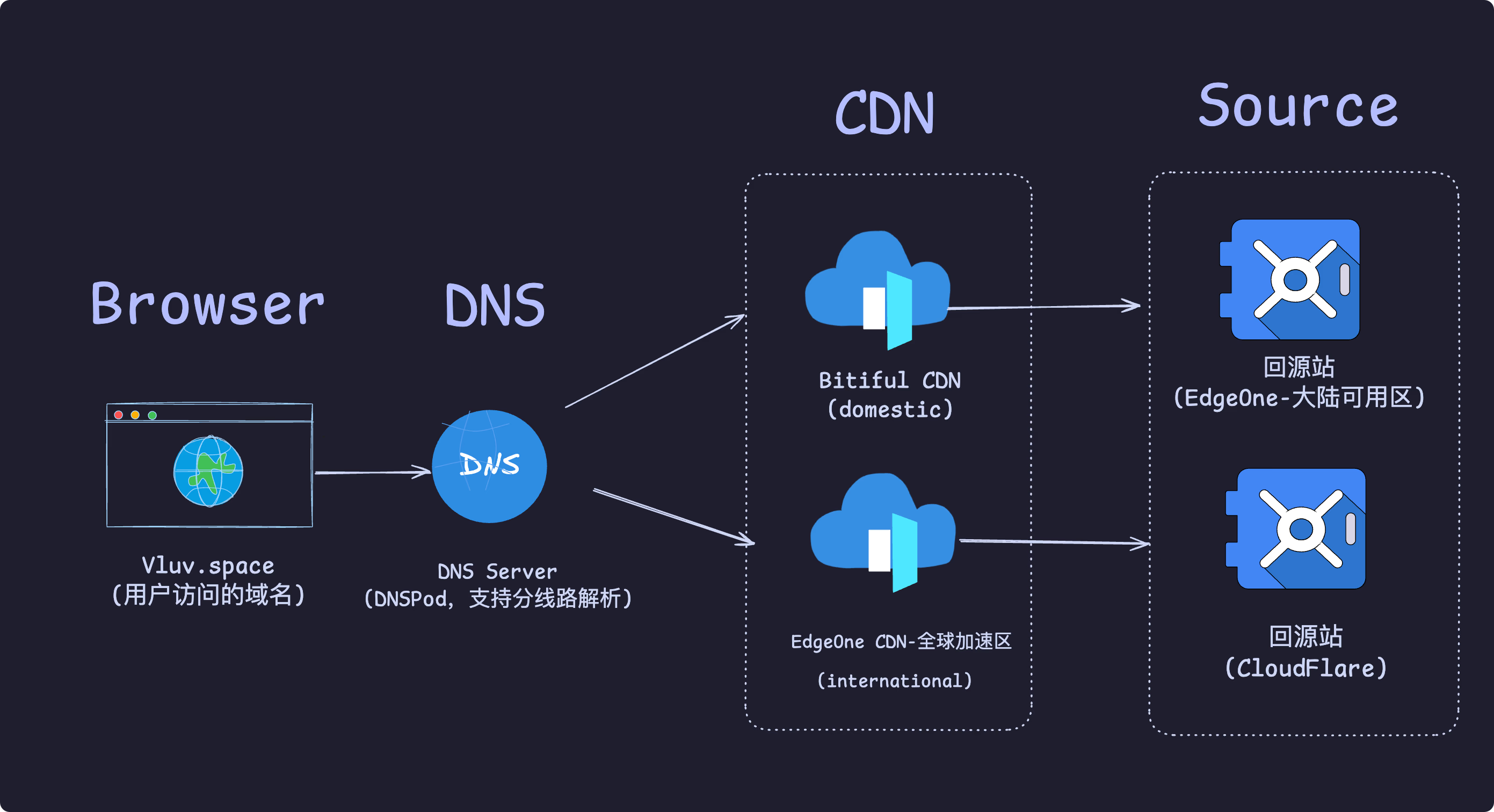
The rough flow:
1. **User request:** The user types `vluv.space` into the browser, and the OS sends a resolution request to the *Local DNS Server* (browsers and the OS also cache DNS results, skipped here)
2. **Recursive query:** If the *Local DNS Server* has no cache, it starts from the *Root DNS Server*, works its way down to the *TLD (Top-Level-Domain) DNS Server* for `.space`, and finally reaches the *Authoritative DNS Server* responsible for `vluv.space`
3. **Different CNAME records by route**: The *Authoritative DNS Server*, the endpoint of the whole query chain, holds all DNS records for `vluv.space` (e.g. A, CNAME, TXT records...); here that is Tencent Cloud's DNSPod server.
Tencent Cloud's smart resolution detects where the user comes from and returns an IP accordingly, see [DNS smart resolution route documentation - DNSPod](https://docs.dnspod.cn/dns/dns-record-line/#%E4%BA%91%E5%8E%82%E5%95%86)
- **Domestic route**: if the user is judged to be in mainland China, the authoritative DNS server returns a CNAME record pointing to the **domestic CDN**, e.g. `vluv.space.s4cdn.dogecast.com.`
- **Overseas visitors**: otherwise, it returns a CNAME record pointing to the **overseas CDN**, e.g. `vluv.space.eo.dnse4.com.`
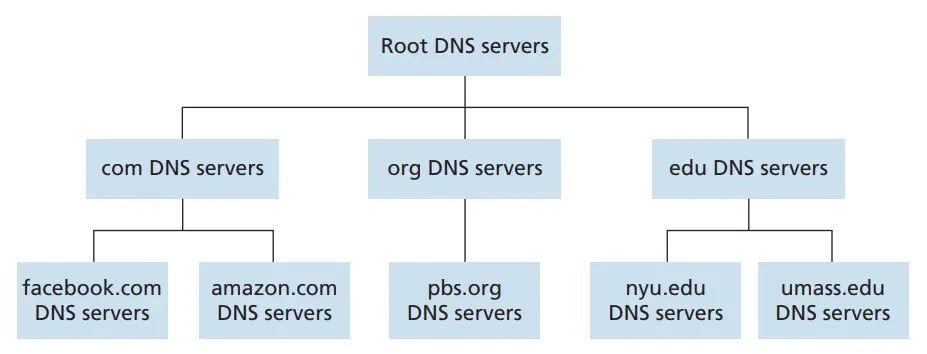
**Final CDN resolution**: After the *Local DNS Server* gets the CNAME record, it starts another **full round of DNS resolution** for the new domain in that record. In the end the CDN provider's *Authoritative DNS Server* system takes over, and based on the user's location, node load, and so on, returns the IP of the most suitable edge node. The user's browser gets this IP, connects to the CDN edge node, and fetches the site content at full speed.
| Probe location | Response IP | IP location | Response time |
| ------------------------- | --------------- | ------------------------------- | ------------- |
| Telecom, Dongguan | `121.14.153.91` | China/Guangdong/Dongguan/Telecom | <1ms |
| Telecom, Taiyuan | `1.71.145.167` | China/Shanxi/Taiyuan/Telecom | 1ms |
| Telecom, Longyan | `106.126.9.144` | China/Fujian/Quanzhou/Telecom | 5ms |
| Telecom, Chongqing | `124.115.13.87` | China/Shaanxi/Xi'an/Telecom | 18ms |
| Telecom, Suzhou | `58.216.60.143` | China/Jiangsu/Changzhou/Telecom | 4ms |
| Seoul, South Korea | `43.159.99.18` | Anycast/Tencent Cloud | 32ms |
| London, UK | `43.159.99.18` | Anycast/Tencent Cloud | 18ms |
> [!NOTE]- Anycast, TTL
>
> - Notice that all overseas responses share the IP `43.159.99.18`. This is actually multiple servers in different locations sharing one IP address, see [What is Anycast? | How Anycast works | Cloudflare](https://www.cloudflare.com/zh-cn/learning/cdn/glossary/anycast-network/)
> - The first visit to an obscure site usually goes through the whole lengthy DNS query above. Doing that full round trip every time would add a lot of latency. DNS caching solves this: the TTL (Time To Live) field configured on the **Authoritative DNS Server** is the cache expiry time
To verify the split routing works, run `{shell} curl -I ` and inspect the response headers. Taking EdgeOne as an example, if the response contains an `eo-cache-status` header, the request went through an EdgeOne CDN node. See the [EdgeOne default HTTP response headers documentation](https://cloud.tencent.com/document/product/1552/87655)
## Steps
### Domestic and Overseas CDN Setup
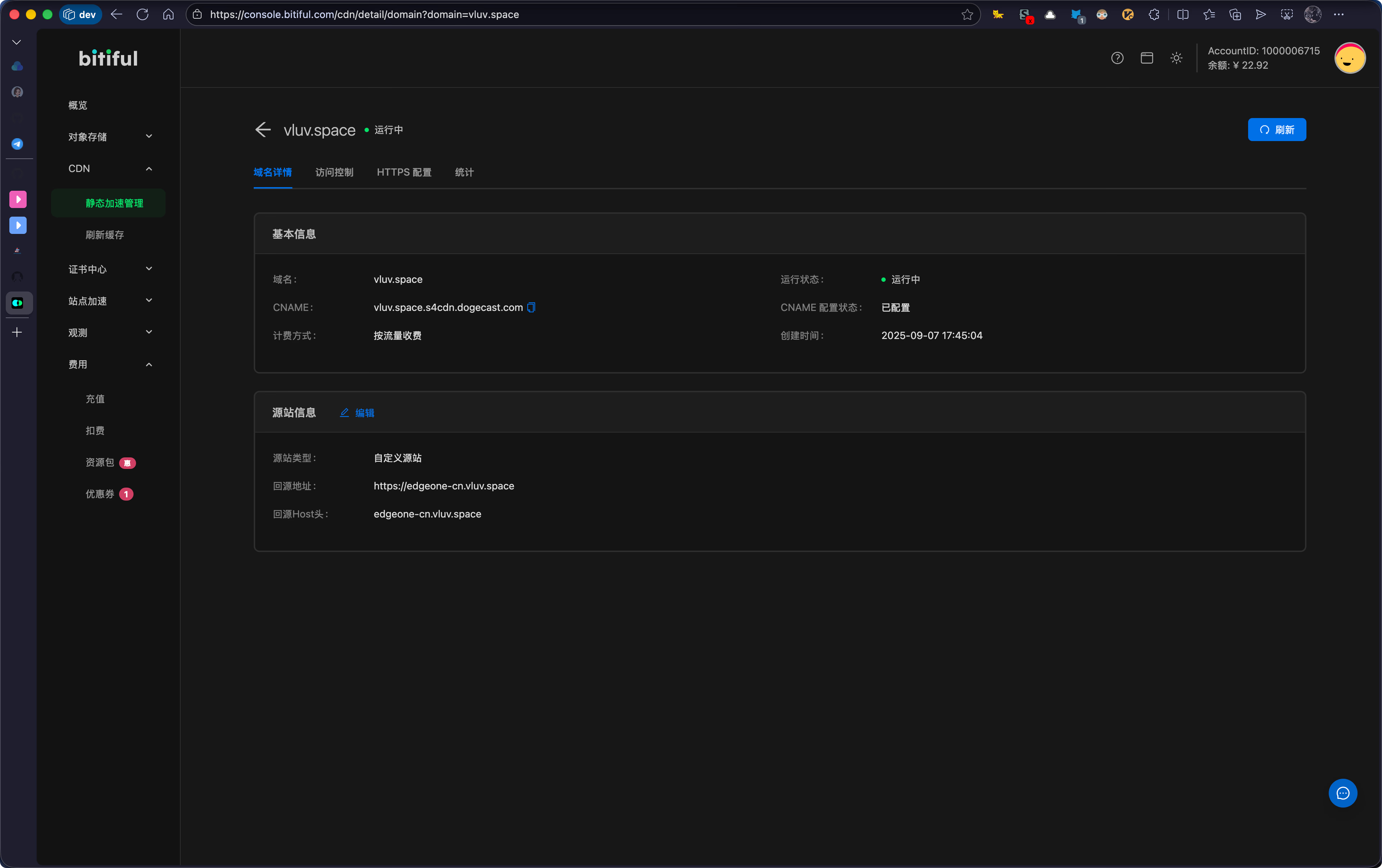
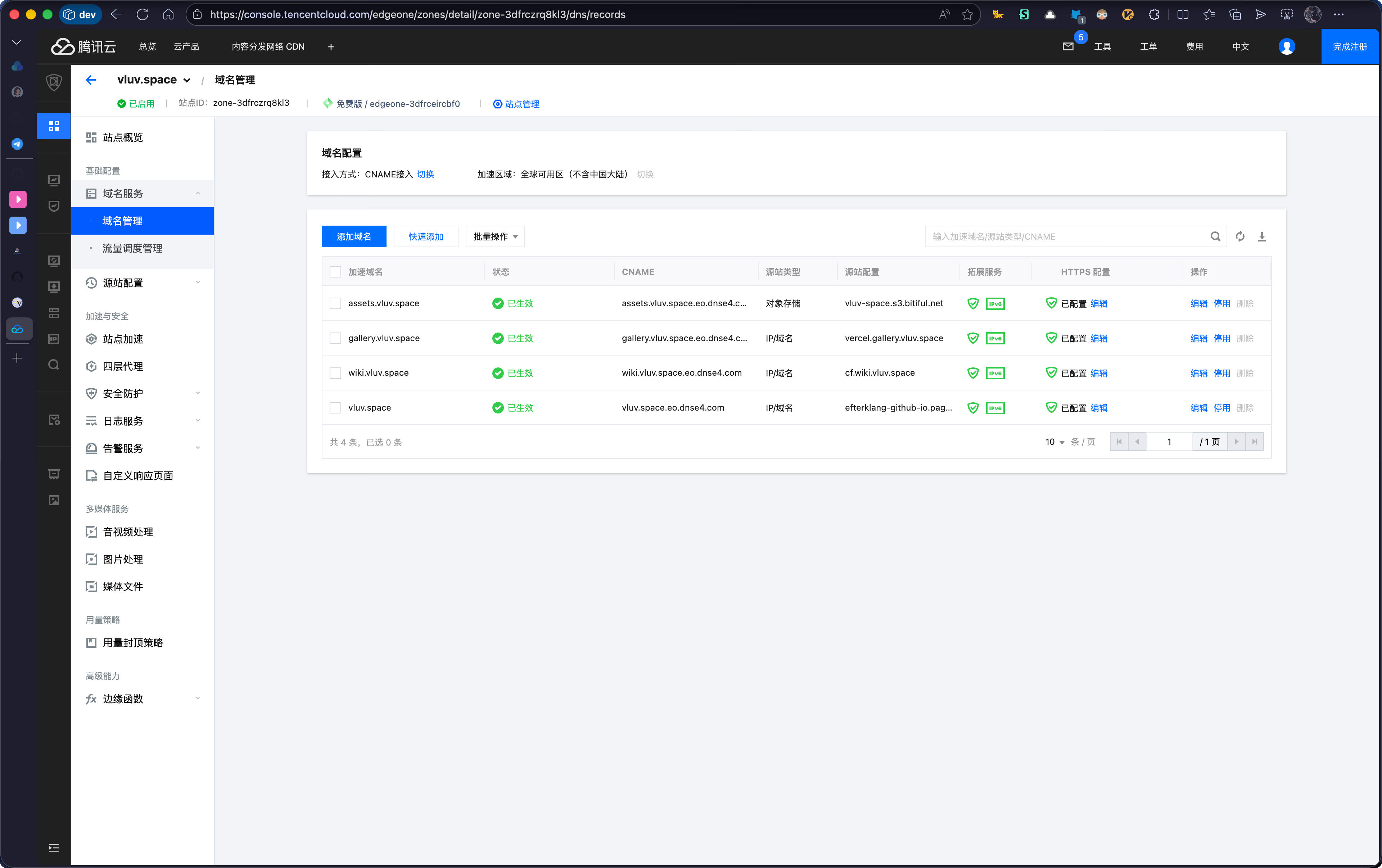
Onboard each CDN following the provider's instructions. For EdgeOne, see [EdgeOne walkthrough: quick onboarding for security and acceleration - Tencent EdgeOne](https://edgeone.ai/zh/document/54208) and just follow the steps. Roughly:
1. Add the site
2. Choose the service region and plan
3. Choose the acceleration region and access mode (usually CNAME access)
> [!warning] About origin configuration
>
> EdgeOne: it is recommended to place your origin in the same region as the acceleration region. For example, if the acceleration region is the Chinese mainland availability zone, configure a domestic origin. If the origin is in the global availability zone (excluding the Chinese mainland), origin pulls cross the border and performance cannot be guaranteed.
>
> - For the domestic CDN, use an origin inside mainland China; EdgeOne's China version (Chinese mainland availability zone) works
> - For the overseas CDN there are more origin options: Cloudflare Pages, EdgeOne Pages, Vercel, GitHub Pages, etc.
### DNSPod CNAME Split Routing
DNSPod can return different CNAMEs depending on the user's route, so domestic users go to Bitiful and overseas users go to EdgeOne.
Configuration steps:
1. Log in to the DNSPod console, select the domain, and open the "Record Management" page
2. Add two CNAME records, one for the domestic route and one for the overseas route, as in the table below
| Host | Type | Route | Value | TTL | Note |
| ---- | ----- | -------- | -------------------------------- | --- | ------------ |
| `@` | CNAME | Domestic | `vluv.space.s4cdn.dogecast.com.` | 600 | Domestic CDN |
| `@` | CNAME | Overseas | `vluv.space.eo.dnse4.com.` | 600 | Global CDN |
Do the same for the image hosting domain:
| Host | Type | Route | Value | TTL | Note |
| -------- | ----- | -------- | --------------------------------------- | --- | ------------ |
| `assets` | CNAME | Domestic | `assets.vluv.space.s4cdn.dogecast.com.` | 600 | Domestic CDN |
| `assets` | CNAME | Overseas | `assets.vluv.space.eo.dnse4.com.` | 600 | Global CDN |
## Results
Test site: [ITDOG](https://www.itdog.cn/ping/vluv.space)
>[!TLDR]- Domestic speed test results
>
> | Region/ISP | Fastest | Slowest | Average |
> | ------------- | ------------------------ | ------------------------ | ------- |
> | All nodes | Shanghai Telecom <1ms | Taiyuan Mobile 191ms | 12ms |
> | China Telecom | Shanghai Telecom <1ms | Yuxi Telecom 144ms | 12ms |
> | China Unicom | Xining Unicom <1ms | Yuxi Unicom 47ms | 10ms |
> | China Mobile | Changsha Mobile <1ms | Taiyuan Mobile 191ms | 13ms |
> | East China | Shanghai Telecom <1ms | Zhoushan Unicom 21ms | 7ms |
> | South China | Dongguan Telecom <1ms | Shenzhen Mobile 27ms | 11ms |
> | Central China | Changsha Mobile <1ms | Yueyang Unicom 18ms | 7ms |
> | North China | Tianjin Mobile 2ms | Taiyuan Mobile 191ms | 27ms |
> | Southwest | Kunming Telecom <1ms | Yuxi Telecom 144ms | 24ms |
> | Northwest | Xining Unicom <1ms | Yinchuan Mobile 71ms | 8ms |
> | Northeast | Dalian Unicom <1ms | Songyuan Unicom 15ms | 5ms |
> | HK/MO/TW | Hong Kong 2ms | Taiwan 27ms | 14ms |
> [!TLDR]- International speed test results
>
> | Region | Fastest | Slowest | Average |
> | ------------- | -------------------- | -------------------- | ------- |
> | All nodes | Los Angeles <1ms | South Africa 178ms | 35ms |
> | Asia | Singapore 1ms | Turkey 35ms | 17ms |
> | Europe | Frankfurt <1ms | London 16ms | 8ms |
> | North America | Los Angeles <1ms | Seattle 27ms | 9ms |
> | South America | Argentina 21ms | São Paulo 50ms | 35ms |
> | Africa | Cairo <1ms | South Africa 178ms | 89ms |
> | Oceania | New Zealand 142ms | New Zealand 142ms | 142ms |